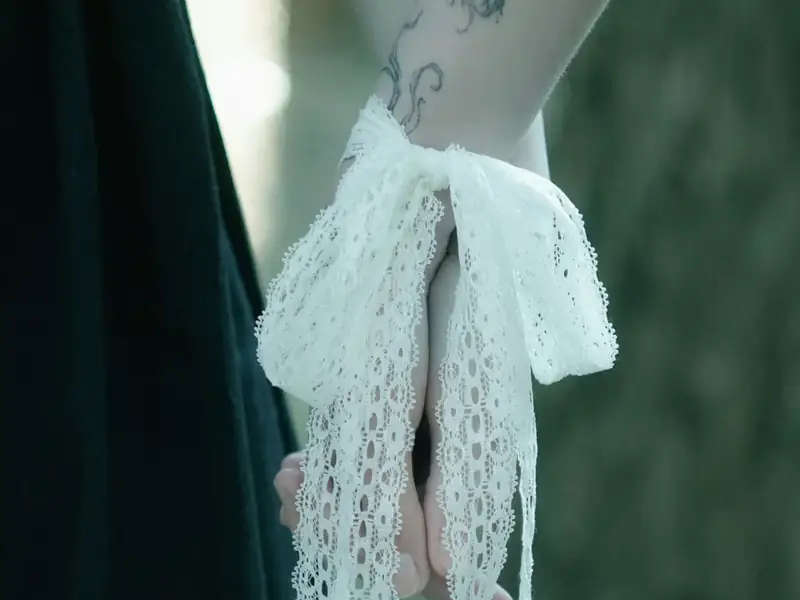
If you’ve been to a celebrant-led wedding recently, there’s a good chance you’ve seen a handfasting: a couple’s hands gently bound together with ribbons or cords while words are spoken about the promises they’re making. It’s simple, it’s visual, and it means something.
What is handfasting?
Handfasting is a ritual in which a couple’s hands are joined and wrapped with one or more cords, ribbons or strips of fabric to symbolise their commitment. In British history, the word “handfasting” was used for a betrothal or promise to marry, and the ritual has strong associations with Celtic and pagan traditions. Today it’s enjoyed by couples of every background and belief, simply because it’s such a lovely way to show two lives being bound together.
You’ll often hear it linked to the phrase “tying the knot”. Whether that’s where the phrase really comes from is debated, but it’s a charming thought — and one guests love.
How does a handfasting work?
There’s no single “correct” way, but a typical handfasting goes something like this:
- Your celebrant explains what the ritual means, so guests know what they’re watching.
- You join hands — often right hand to right hand and left to left, forming an infinity shape, or simply one hand each.
- The cords are draped over your hands, one at a time. Each one can represent a different promise or quality, such as love, friendship, patience, adventure or family.
- Your celebrant (or chosen family and friends) says a few words as each cord is laid.
- The cords are wrapped and loosely tied. You slip your hands out, leaving the knot intact as a keepsake.
The whole thing usually takes three to five minutes.
Choosing your handfasting cords
This is the fun part. Your cords can be:
- Ribbons in your wedding colours
- Fabric from something meaningful — a parent’s wedding dress, a grandparent’s tie, a family tartan
- A handmade braided cord, bought or made yourself
- A single length of silk or velvet, if you like things simple
Some couples give each colour a meaning. There’s no official colour code, so choose meanings that feel right to you — for example, red for passion, green for growth, blue for loyalty, gold for prosperity, or colours that represent each of your families.
Practical tip: aim for cords around 1.5 to 2 metres long so there’s plenty to wrap and tie, and bring a spare in case one goes missing on the day.
Want a ceremony that sounds unmistakably like you two?Start with a free, no-pressure 30 minute video call.
Book a free consultationInvolving family and friends
One of the loveliest ways to make a handfasting personal is to invite people to lay a cord. Parents, grandparents, children or best friends can each step forward, place their ribbon and share a short wish for you. It turns a ritual into a moment where the people who love you most are physically part of your promise.
Where does handfasting fit in the ceremony?
Most often it comes straight after your vows, while you’re already facing each other and holding hands. Some couples prefer it at the end, as the final moment before the declaration. Your celebrant will help place it where it flows best.
Handfasting wording ideas
The words can be poetic, simple, funny or deeply heartfelt. Some couples use a traditional-style blessing; others ask their celebrant to write something completely original. A classic structure is a series of questions — “Will you share each other’s laughter?” “Will you share each other’s burdens?” — with the couple answering “We will” as each cord is laid. It’s a great way to include promises without the pressure of a long speech.
Is handfasting legal?
In England, a handfasting is a symbolic ritual rather than a legal marriage. If you’re having a celebrant-led wedding, you’ll register your marriage separately with the register office. Your handfasting, vows and ceremony are then free to be completely personal.
Keeping your cords afterwards
Many couples keep their knotted cords in a box or frame, bring them out on anniversaries, or pass them on to their children. Some use them again for a vow renewal years later. They make a beautiful reminder of the day you literally tied the knot.