
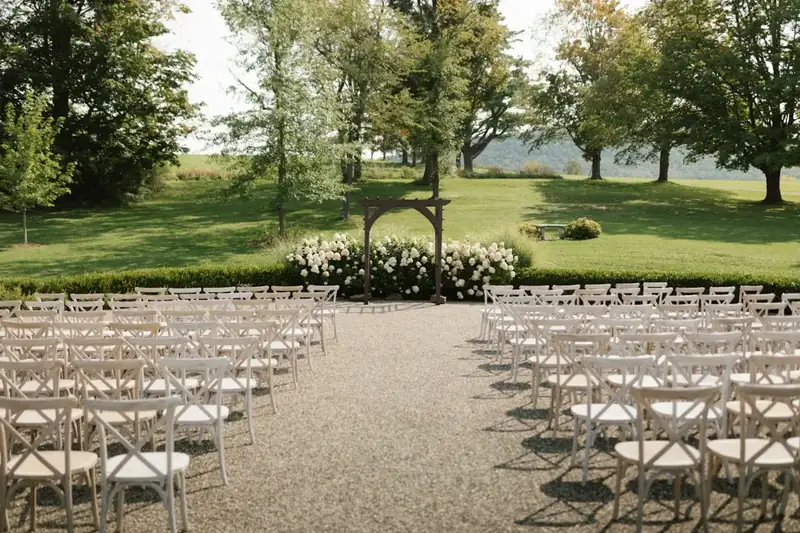
One of the biggest reasons couples choose a celebrant is freedom of location. Because the legal registration is done separately in England, your celebrant ceremony doesn’t need a licensed room. That opens up family gardens, farms, woodland, beaches, village halls, pubs, and venues that are far more affordable because they don’t hold a wedding licence.
Why choose a non-licensed venue?
- Somewhere that means something — your parents’ garden, the field where you got engaged, the village where you grew up.
- Often better value. Venues without a wedding licence can cost less to hire for a ceremony.
- More flexibility with dates, times and how the day flows.
- Everything in one place. Ceremony, drinks, food and dancing without moving guests.
1. Get permission first
Before you fall in love with a spot, make sure you’re allowed to use it:
- Private land: ask the owner in writing, and agree access, parking, toilets and how long you can stay.
- Public parks and beauty spots: contact the council or organisation that manages it. Many require a booking, a fee or insurance for gatherings, and some don’t allow ceremonies at all.
- National Trust, woodland or estate land: contact the site directly — they often have events teams.
- Your own garden: check the neighbours are on side, especially if there’ll be music.
2. Always have a weather plan
This is Britain. Whatever the forecast in May, have a Plan B:
- a marquee, tipi or stretch tent
- a barn, hall or room nearby you can move into
- umbrellas in your colours (they look great in photos)
- a decision time — say, 10am on the day — when you commit to inside or outside
Think about the heat, too: shade, water and suncream for a summer ceremony.
Want a ceremony that sounds unmistakably like you two?Start with a free, no-pressure 30 minute video call.
Book a free consultation3. Make sure everyone can hear
Outdoors, voices disappear fast, especially with wind, trees or a nearby road. For more than about 30 guests, consider a small battery-powered PA system with a microphone — ask your celebrant, DJ or band whether they can provide one. Position guests close and in a curve rather than long straight rows.
4. Think about the light and timing
- Face the sun away from your guests’ eyes and, ideally, not straight into yours.
- Midday sun is harsh for photos. Late afternoon or early evening light is softer and more flattering.
- Sunset ceremonies are gorgeous — check the exact sunset time for your date and allow for photos afterwards.
5. Guest comfort and practicalities
- Seating (chairs, hay bales, benches) — especially for older guests
- A clear, level path for anyone with mobility needs
- Toilets within easy reach
- Parking or transport, with clear signs
- Footwear advice on the invitation if it’s a field or woodland
- Midge spray for summer evenings by water
6. Rituals that work outdoors
Candles blow out, but sand ceremonies, handfastings, tree planting and oathing stones are perfect in the open air. See our list of ceremony ritual ideas.
7. Don’t forget the legal bit
Your outdoor celebrant ceremony isn’t your legal marriage, so book a simple ceremony at your register office before or after the day. Our guide to how the legal bit works explains the steps and timings.
Ideas around Leicestershire
Leicestershire and Rutland are full of beautiful possibilities: country gardens, farm barns and orchards, woodland in the National Forest and Charnwood, village greens and halls, riverside pubs and waterside views. Wherever you have in mind, ask the owner first — and then tell your celebrant, who can help you think through the practicalities.