A celebration of life is a gathering to remember someone who has died and to celebrate who they were. It can be held instead of a traditional funeral, alongside one, or weeks or months afterwards. There’s no right or wrong way to do it — only the way that feels right for the person and the people who loved them.
What is a celebration of life?
A celebration of life focuses on the life that was lived: the stories, the personality, the passions and the people. It’s often (though not always) more relaxed and personal than a traditional funeral service. It may or may not include the body or ashes, and it can be held almost anywhere.
Celebration of life vs funeral
- A funeral usually takes place within a few weeks of the death, with the coffin present, often at a crematorium, church or cemetery, and is usually arranged through a funeral director.
- A celebration of life can happen at any time, anywhere, and may be combined with the funeral or held separately — for example after a direct cremation.
Many families now choose a celebrant-led funeral that feels like a celebration of life, with the coffin present — so the lines blur, and that’s absolutely fine.
Direct cremation and a celebration of life
A direct cremation is a cremation without a service or mourners present. The ashes are returned to the family afterwards. It has become a popular choice, often because it gives families time to plan a meaningful gathering without rushing, and lets people travel from far away. A celebration of life can then be held a few weeks or months later — sometimes on a meaningful date such as a birthday.
Would you like help creating a ceremony for someone you’ve lost?Get in touch whenever you’re ready.
Get in touchStep 1: Talk about what they would have wanted
Did they leave any wishes? Did they ever say “don’t make a fuss” or “I want everyone in bright colours”? Talk with family and close friends about the person’s personality and values. Would they have wanted something quiet and gentle, or a proper party?
Step 2: Choose a date and place
Popular venues include:
- a village or community hall
- their favourite pub, restaurant or sports club
- a garden, park or woodland (with permission)
- a hotel function room
- a woodland or natural burial ground
- a crematorium, if the service is held with the coffin present
Step 3: Decide what the ceremony will include
A celebrant-led celebration of life often includes:
- words of welcome and acknowledgement of loss
- a tribute or eulogy telling their life story
- memories or readings from family and friends
- music they loved, played or performed
- a moment of quiet reflection
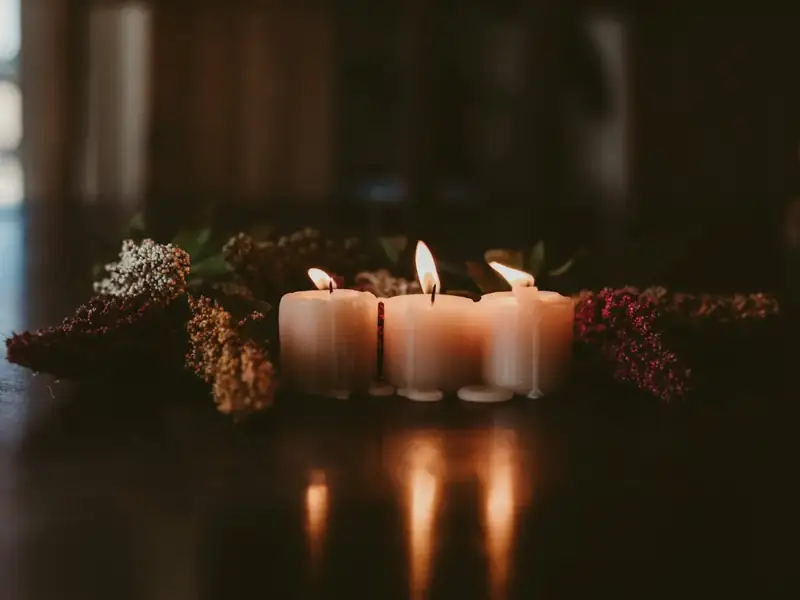
- a ritual, such as lighting candles, sharing written memories or planting a tree
- a hymn or prayer, if faith was part of their life
- words of farewell and thanks
Step 4: Add personal touches
- a photo display or slideshow
- their favourite food, drink or colours
- a dress code — football shirts, bright colours, their signature hat
- a memory table with their belongings: medals, tools, books, knitting
- memory cards for guests to write a story
- seeds, plants or bookmarks for guests to take home
Step 5: Scattering or interring ashes
If ashes are to be scattered, this can be part of the celebration or a smaller, private moment. Always ask the landowner’s permission. If you’re thinking of a river or the sea, the Environment Agency has guidance on scattering ashes in water. A celebrant can write a short ceremony for this too.
How a funeral celebrant helps
A funeral celebrant sits with you and your family, listens to your memories, writes the ceremony and tribute, liaises with the funeral director and venue, and leads the gathering with calm and care, so you can simply be present. If anyone wants to speak but isn’t sure they’ll manage on the day, a celebrant can read on their behalf.
If you’re writing the tribute yourself, our guide on how to write a eulogy may help.